


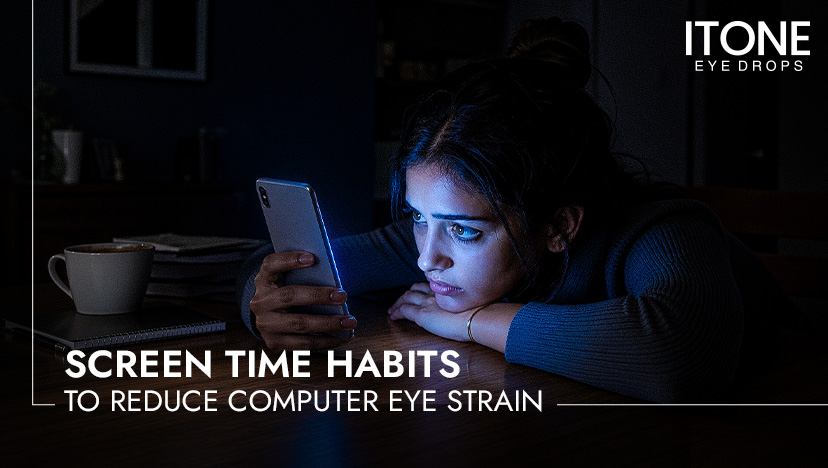
Screen Time Habits That Reduce Computer Eye Strain

Author: itone | 2026-07-17
Between the first email at 9 in the morning and the last scroll before bed, most of us cross an invisible threshold where our eyes start to fight the screen rather than just see it. The dryness. There is dull pain behind the brow. The realization that you haven’t blinked in two hours while staring at a spreadsheet.
This is not a sign of weakness. It is the collision of modern work and biology. The good news is that most of the causes of computer eye strain are measurable, well-researched, and, for the most part, preventable with Itone eye drops and the right screen time management techniques.
Why Your Eyes Are Working Harder Than You Think
Digital eye strain, formerly ‘computer vision syndrome’, is an eye disorder that affects a large number of students and employees who regularly work on their laptops and mobile phones. As seen from the statistics, the incidence rate is somewhere between 45% and over 90%. This eye problem has typical symptoms such as headaches, burning eyes, blurring, and watery eyes.
Reduced blinking is one of the main causes. Screen time can reduce a person’s typical blink frequency from 15 to 20 times per minute to 5 to 7. Many blinks also become incomplete, which prevents the tear film from spreading properly. This makes the surface of the eyes dehydrated and irritated, which is why many people look for eye drops for computer eye strain later in the day.
The Effective Screen Time Management Techniques
Not every “eye strain hack” that goes viral on the internet has evidence to back it up. Here’s what works and how to do it properly.
The 20-20-20 rule, done properly.
You’ve probably heard that you should spend 20 seconds every 20 minutes staring at something 20 feet away. There’s a reason it’s popular: after just a few weeks of consistent practice, studies tracking heavy screen users have demonstrated notable improvements in headaches, burning, and tired eyes.
However, most people are unaware that the relief doesn’t begin until you look more than 20 feet away. Compared to staring at your phone, a wall, or something at arm’s length, true distance relaxes the eye’s focusing muscle more. If your “break” is limited to shifting your focus from one nearby object to another, your eyes are still working. Look out the window and use ITONE eye drops to reduce digital eye strain.
Train your Blink, Don’t Just Increase Your Breaks
The majority of screen time management advice completely ignores this habit, which could be the most beneficial. Blinking more frequently is not enough because screen time specifically suppresses full blinks. This is why the blink needs to be completed.
Try this: take five to ten slow, deliberate blinks every hour, closing your lids completely rather than squeezing. It recoats the surface of the eyes with tears in fifteen seconds, which is precisely what incomplete screen blinks are unable to accomplish.
Position the Monitor Correctly
The top of the screen should be at eye level or just below. OSHA (Occupational Safety and Health Administration) recommends positioning the monitor 15 to 20 degrees below the horizontal line of sight. (Source)
A slightly lowered gaze can encourage a more relaxed neck position and lessen the exposed surface area of the eyes. Keep the main monitor directly in front of you.
Reduce Glare and Balance Brightness
Excessive lighting and monitor reflections can lead to headaches, poor posture, and eye strain.
It is more appropriate to put windows to the side of the screen than straight ahead or directly behind it. If required, pull down the curtains and position your lamps to be directed at your documents rather than the display.
Balance the lighting of the screen with the environment. The page should not look as if it were an illuminated lamp; it should simply be visible. Dark mode may be soothing in low light, but it isn’t inherently better for your health. Pick the setting that makes reading comfortable without squinting or reflections.
Use Eye Drops for Digital Eye Strain as Part of a Wider Routine
Most people seek eye drops for computer eye strain due to fatigue, irritation, and weariness of the eyes. Eye drops might assist in making one feel more comfortable; however, they must not replace workstation adjustments, taking regular pauses, and proper blinking.
The same goes for picking eye drops to relieve digital eye strain. If symptoms persist, follow the instructions on the product packaging and get professional help.
At ITONE, we believe that regular eye care works best when paired with improved screen time management. For eyes exposed to everyday digital and environmental stressors, ITONE Eye Drops, which are made with 19 herbal ingredients, can be incorporated into a more comprehensive regimen. Use them 4 times a day.
The Takeaway
Computer eye strain is a predictable consequence of screens requiring more of our eyes than they are designed to provide on their own. Real distance breaks, intentional blinking, sensible screen placement, and lighting that doesn’t strain your eyes throughout the day are simple habits that work.
ITONE, an herbal eye drop, is meant to be a simple, regular act of eye care that gets you through every screen you watch because time management alone isn’t quite enough.
FAQs
Q. How can I Prevent Eye Strain When Using a Computer Screen?
With effective management of screen time, application of the 20-20-20 rule, frequent blinking, avoidance of glare and maintaining appropriate distance from the screen, you will not have computer eye strain. ITONE Herbal Eye Drops can be used for daily eye comfort in case dry eyes persist.
Q. Does Reducing Screen Time Help with Eye Strain?
Though reduction of time spent looking at screens may decrease visual strain, avoiding continuous exposure to screens is an even better approach. The impact of visual strain can be decreased through taking breaks, full blinks, proper placement of the screen, and managing screen time. Proper support may increase eye comfort during the day in case of irritation or dryness.
Q. Is 7 Hours of Screen Time Bad for Eyes?
There is an increased chance of developing digital eye strain from seven consecutive hours of viewing on a screen. Eye strain symptoms can be relieved through proper rest periods, proper blinking, correct positioning of the screen, and proper management of screen time.
Q. Which Eye Drop is Best for Computer Users?
ITONE Eye Drops are the best choice for individuals who use computers because they are made up of 19+ herbal ingredients that will refresh your eyes. They should be used in combination with good time management in front of screens such as taking breaks and proper blinking.
You May Also Like

How to Prevent Conjunctivitis During Monsoon Season
Shield your eyes from monsoon infections! Discover how Itone protects vision, eases redness, and works as an effective natural treatment for pink eye.

This Independence Day, Get Freedom from Digital Eye Strain
This Independence Day, discover freedom from digital eye strain with soothing eye drops for dry eyes and refreshing eye relaxation drops for daily comfort.

Dust, Rain & Allergies? Keep Eyes Fresh with Deys ITONE Drops
Fight monsoon eye irritation with Itone Herbal Eye Drops. Explore itone drops uses, itone eye drops ingredients, benefits of itone eye drops now.